← All initiatives

Kaskel initiative · 30 days

Capital Readiness: 30 Days

A 30-day series for founders getting ready to raise capital. Each day: one idea, and one question to sit with. It moves from strategic readiness, to the pitch and the deal, to running a company on investors’ money for the long term.

How to use it: take one day at a time. Read the idea, then answer the reflection question honestly, ideally with your co-founders.

Part 1 · Days 1–10

Strategic Readiness

Day 1: What Capital Really Buys?. Capital buys speed, access, and optionality—not certainty. It increases the cost of poor decisions as much as it amplifies good ones. Reflection: What exact bottleneck will capital remove in the next 12 months?
Day 1

What Capital Really Buys?

ReflectWhat exact bottleneck will capital remove in the next 12 months?

Day 2: Choosing the Right Capital. Different capital expects different outcomes. Misaligned capital forces growth paths the business may not be ready for. Reflection: Does my chosen funding source match my growth intent?
Day 2

Choosing the Right Capital

ReflectDoes my chosen funding source match my growth intent?

Day 3: Optimal Timing to Raise. Raise when indicators are improving, not when survival is threatened. Momentum improves negotiation power and term quality. Reflection: Are we raising from strength or urgency?
Day 3

Optimal Timing to Raise

ReflectAre we raising from strength or urgency?

Day 4: Capital vs Capability. Funding cannot substitute for execution depth. Operational maturity determines how efficiently capital converts to outcomes. Reflection: Which capability must improve before capital truly helps?
Day 4

Capital vs Capability

ReflectWhich capability must improve before capital truly helps?

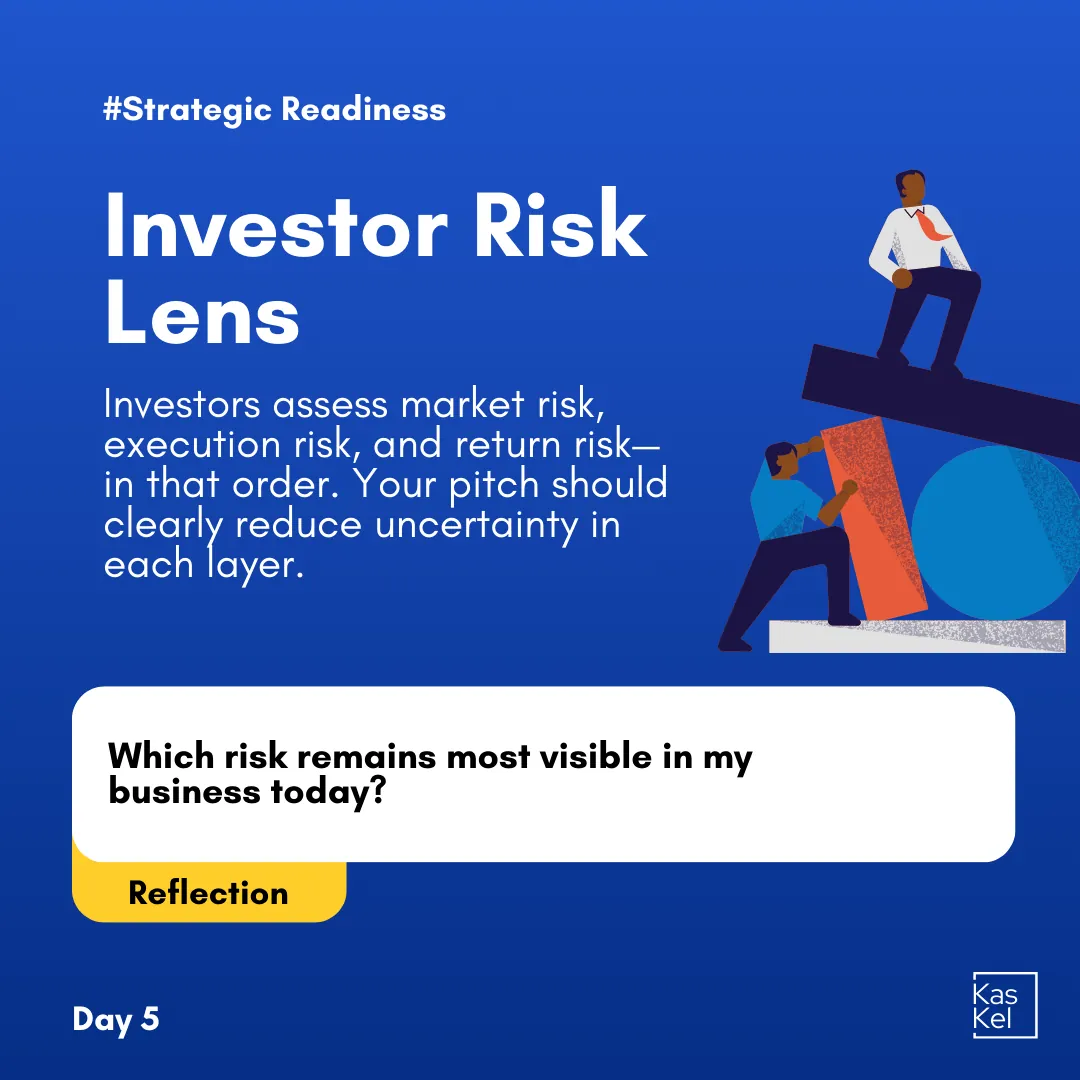
Day 5: Investor Risk Lens. Investors assess market risk, execution risk, and return risk—in that order. Your pitch should clearly reduce uncertainty in each layer. Reflection: Which risk remains most visible in my business today?
Day 5

Investor Risk Lens

ReflectWhich risk remains most visible in my business today?

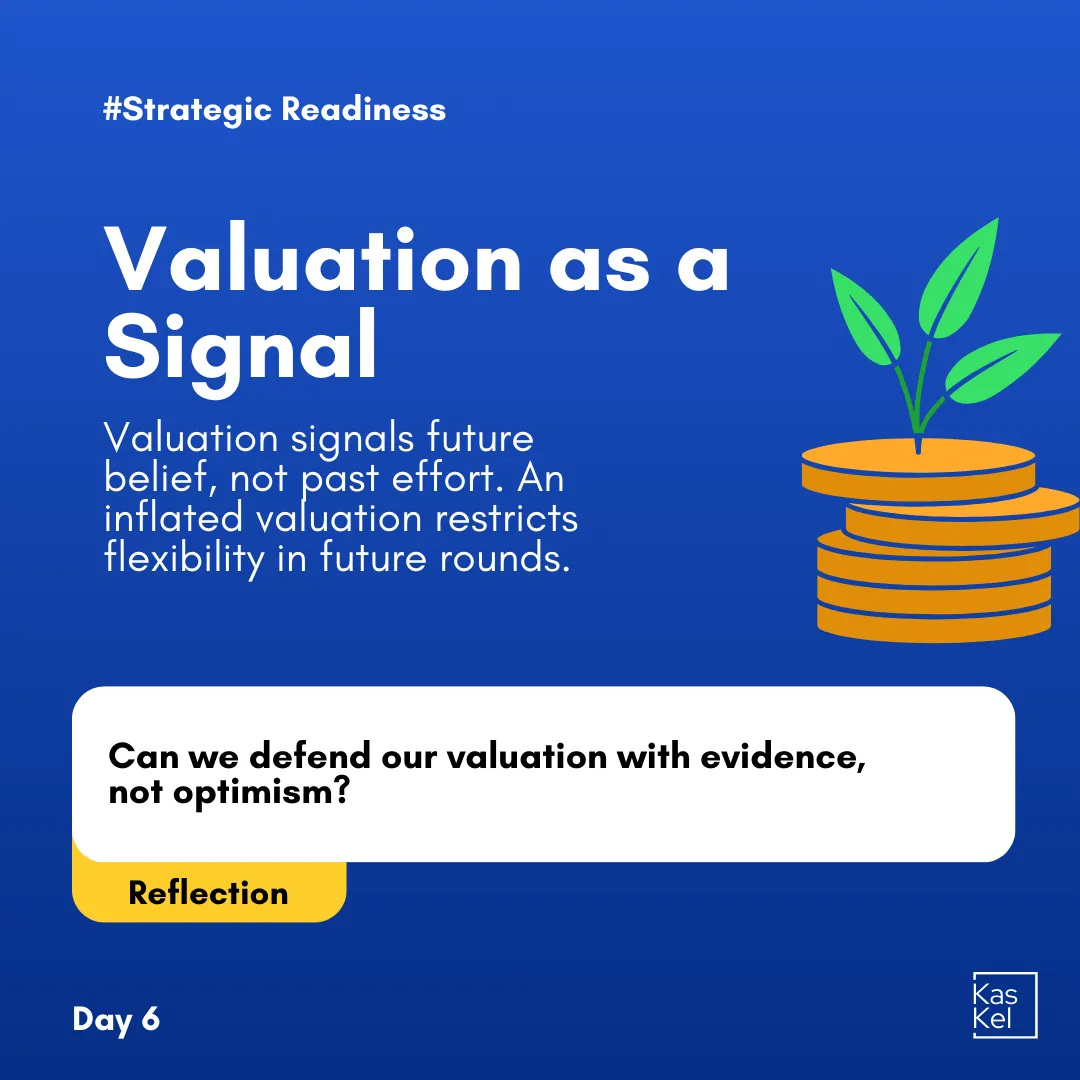
Day 6: Valuation as a Signal. Valuation signals future belief, not past effort. An inflated valuation restricts flexibility in future rounds. Reflection: Can we defend our valuation with evidence, not optimism?
Day 6

Valuation as a Signal

ReflectCan we defend our valuation with evidence, not optimism?

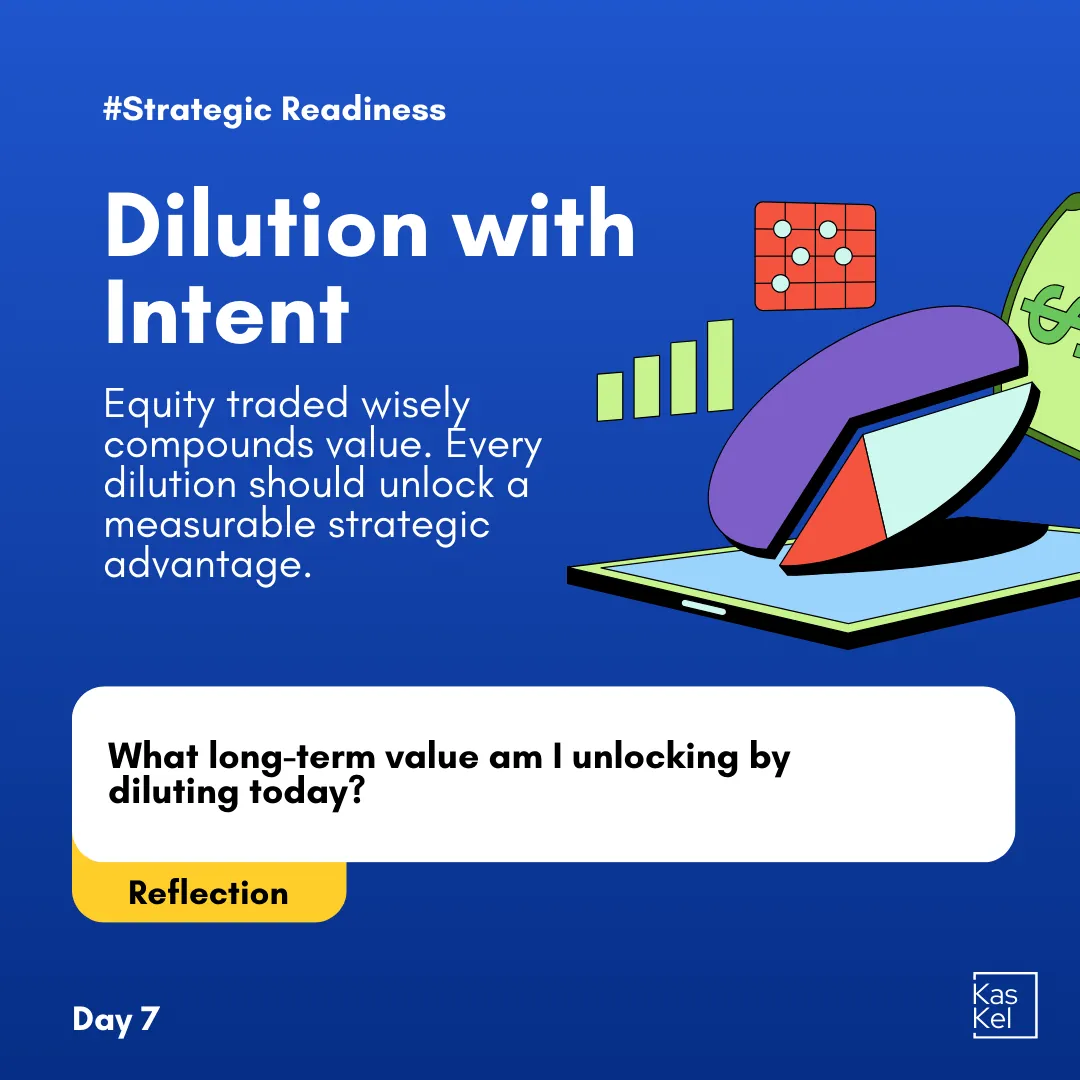
Day 7: Dilution with Intent. Equity traded wisely compounds value. Every dilution should unlock a measurable strategic advantage. Reflection: What long-term value am I unlocking by diluting today?
Day 7

Dilution with Intent

ReflectWhat long-term value am I unlocking by diluting today?

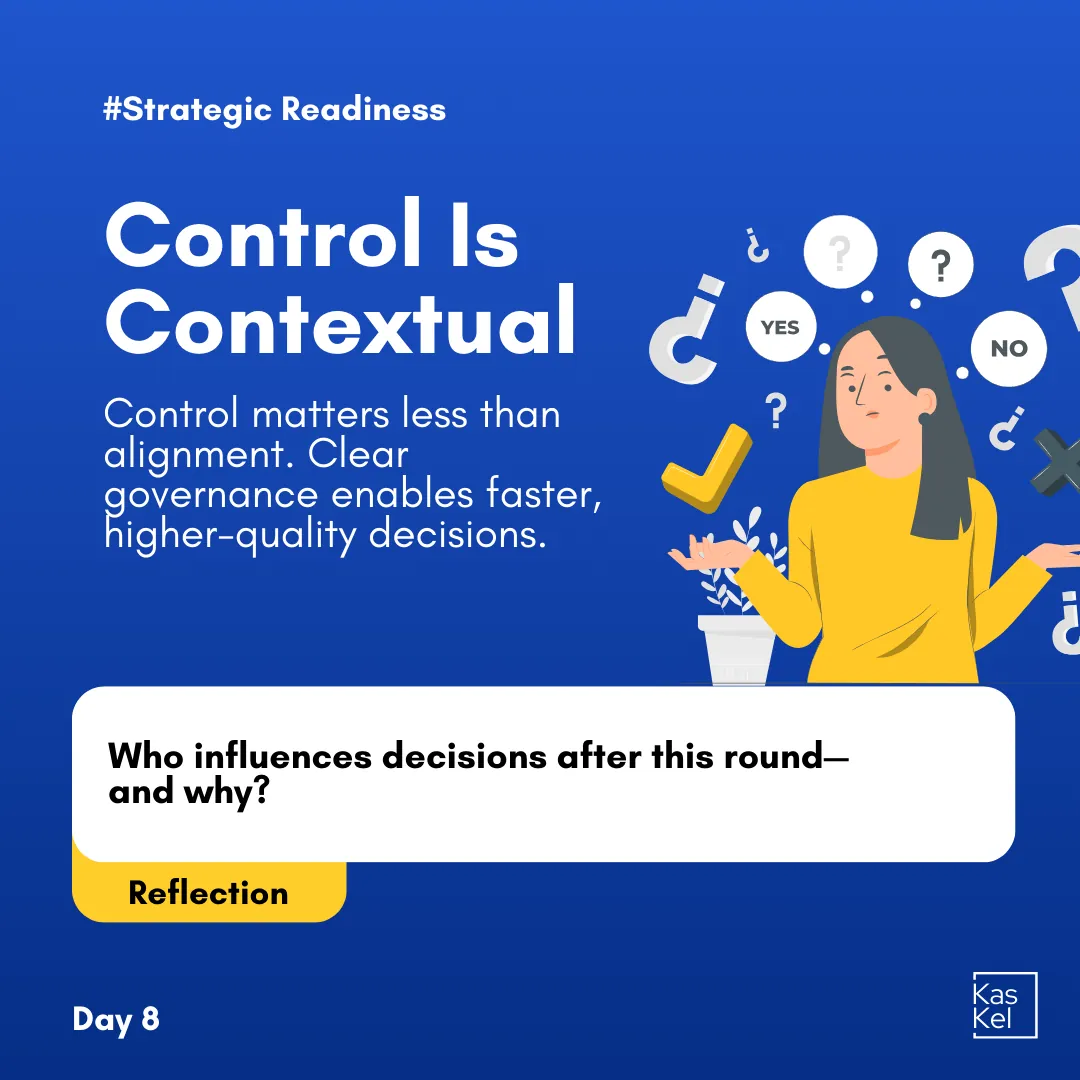
Day 8: Control Is Contextual. Control matters less than alignment. Clear governance enables faster, higher-quality decisions. Reflection: Who influences decisions after this round—and why?
Day 8

Control Is Contextual

ReflectWho influences decisions after this round—and why?

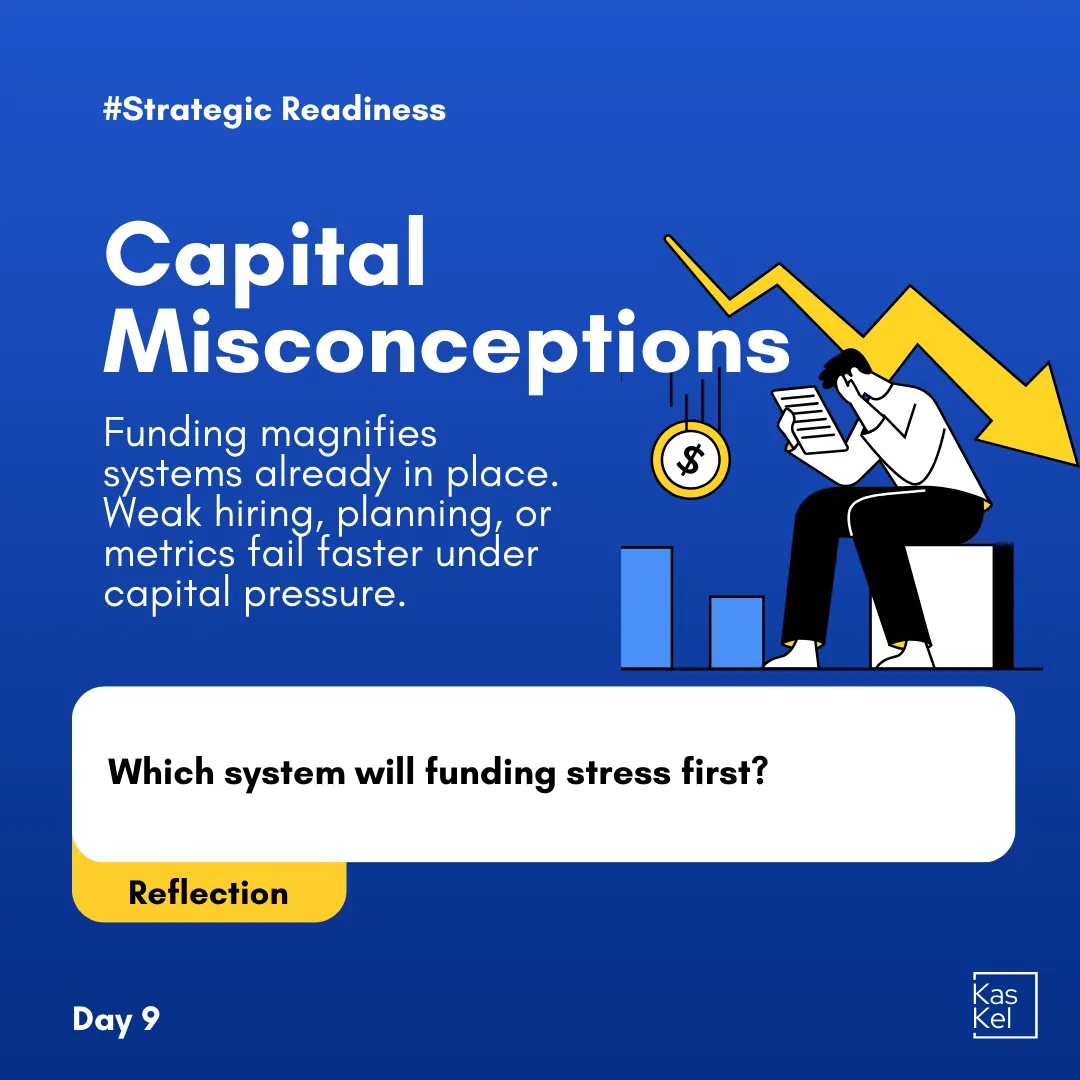
Day 9: Capital Misconceptions. Funding magnifies systems already in place. Weak hiring, planning, or metrics fail faster under capital pressure. Reflection: Which system will funding stress first?
Day 9

Capital Misconceptions

ReflectWhich system will funding stress first?

Day 10: Investment Readiness Test. Readiness is clarity plus repeatability. Investors fund predictability before scale. Reflection: If I were the investor, would I invest here?

Day 10

Investment Readiness Test

ReflectIf I were the investor, would I invest here?

Part 2 · Days 11–20
Pitch, Metrics & Deal Discipline

Day 11: Pitch Deck Objective. The deck earns belief. The founder earns trust through logic and restraint. Reflection: What belief must the investor accept to proceed?

Day 11

Pitch Deck Objective

ReflectWhat belief must the investor accept to proceed?

Day 12: Strategic Narrative. A strong narrative links market shift, urgency, and advantage. It explains why now with evidence, not excitement. Reflection: What irreversible trend is this company riding?
Day 12

Strategic Narrative

ReflectWhat irreversible trend is this company riding?

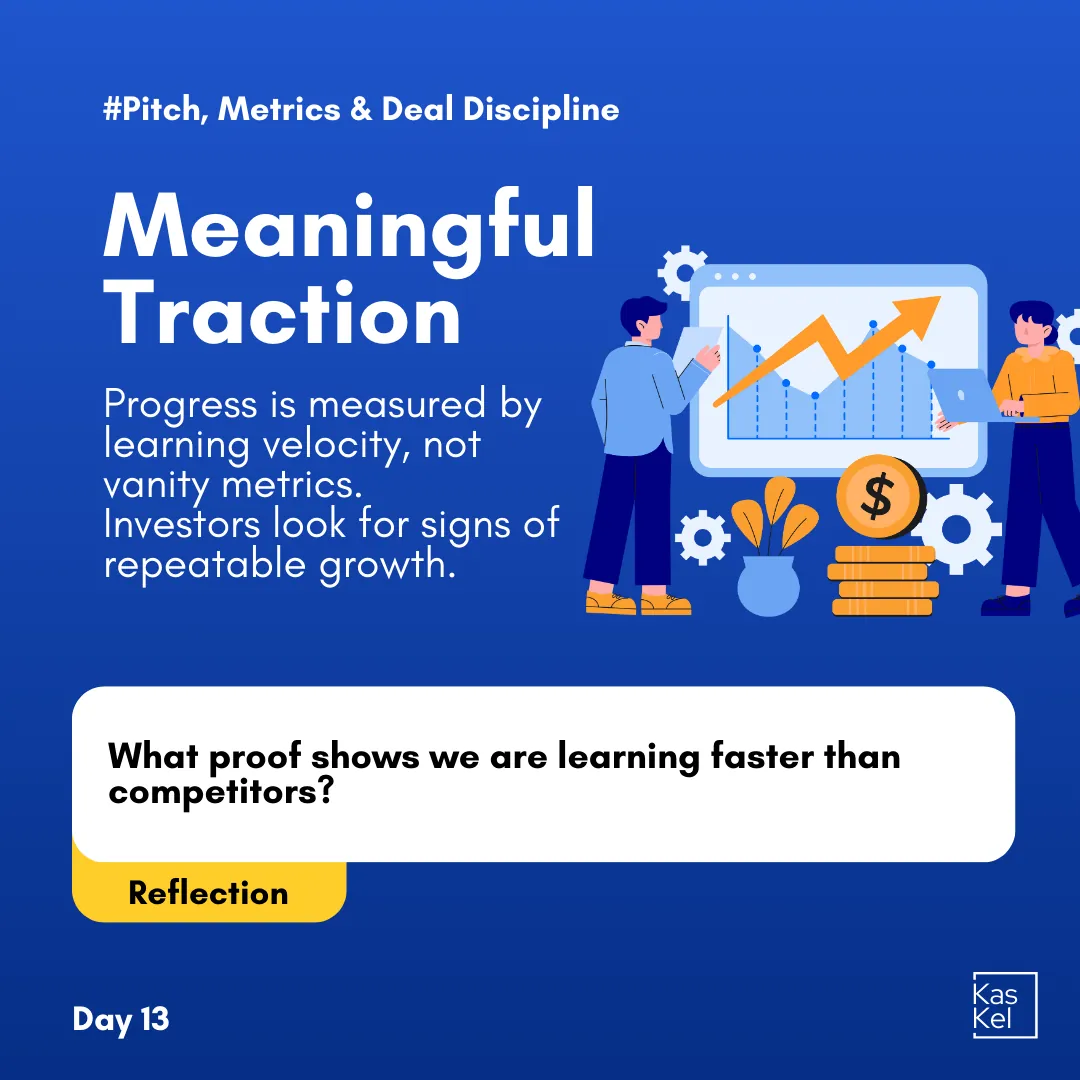
Day 13: Meaningful Traction. Progress is measured by learning velocity, not vanity metrics. Investors look for signs of repeatable growth. Reflection: What proof shows we are learning faster than competitors?
Day 13

Meaningful Traction

ReflectWhat proof shows we are learning faster than competitors?

Day 14: Financial Clarity. Financials should show logic, not complexity. Confidence comes from assumptions that survive questioning. Reflection: Can our unit economics survive scale?

Day 14

Financial Clarity

ReflectCan our unit economics survive scale?

Day 15: Term Sheets Beyond Valuation. Terms define power, downside protection, and future flexibility. Small clauses can have long-term consequences. Reflection: Which clause impacts my next round the most?
Day 15

Term Sheets Beyond Valuation

ReflectWhich clause impacts my next round the most?

Day 16: Founder Signals Investors Watch. Consistency, self-awareness, and decision quality outweigh charisma. How founders respond under pressure matters most. Reflection: What behavior would make an investor doubt my leadership?
Day 16

Founder Signals Investors Watch

ReflectWhat behavior would make an investor doubt my leadership?

Day 17: Due Diligence Mindset. Prepared founders control diligence. Transparency builds credibility faster than perfection. Reflection: What question am I hoping investors don’t ask?
Day 17

Due Diligence Mindset

ReflectWhat question am I hoping investors don’t ask?

Day 18: Negotiation Discipline. Strong negotiations protect downside while preserving alignment. Winning the deal matters less than sustaining the relationship. Reflection: What is my non-negotiable—and why?

Day 18

Negotiation Discipline

ReflectWhat is my non-negotiable—and why?
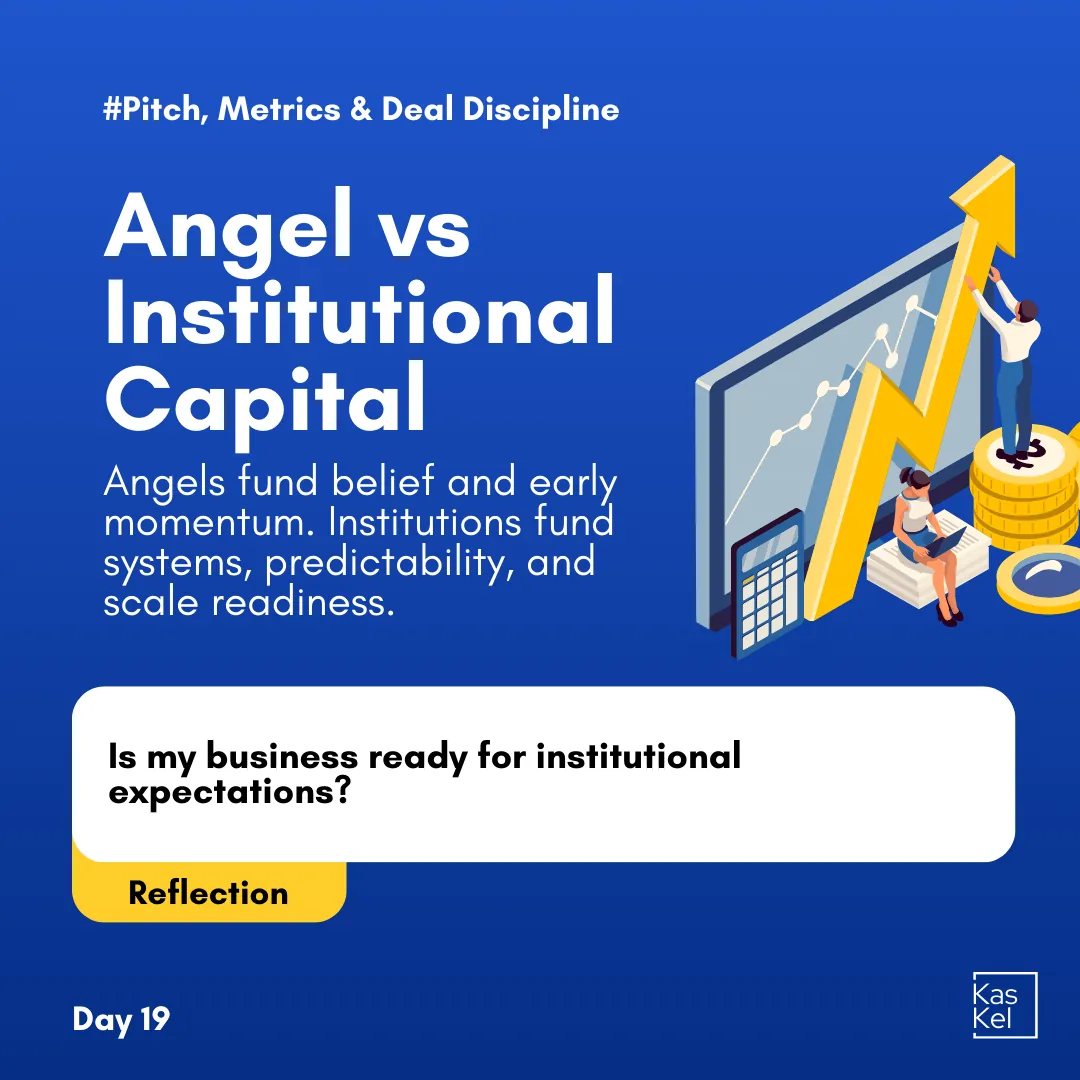
Day 19: Angel vs Institutional Capital. Angels fund belief and early momentum. Institutions fund systems, predictability, and scale readiness. Reflection: Is my business ready for institutional expectations?

Day 19

Angel vs Institutional Capital

ReflectIs my business ready for institutional expectations?

Day 20: Handling Rejection Professionally. Rejection refines positioning and clarity. Emotionless analysis converts rejection into progress. Reflection: What pattern exists in recent rejections?

Day 20

Handling Rejection Professionally

ReflectWhat pattern exists in recent rejections?

Part 3 · Days 21–30
Long-Term Capital Strategy

Day 21: Strategic Capital Value. Capital is strongest when paired with insight and access. The right investor shortens learning cycles. Reflection: What advantage does this investor bring beyond money?
Day 21

Strategic Capital Value

ReflectWhat advantage does this investor bring beyond money?

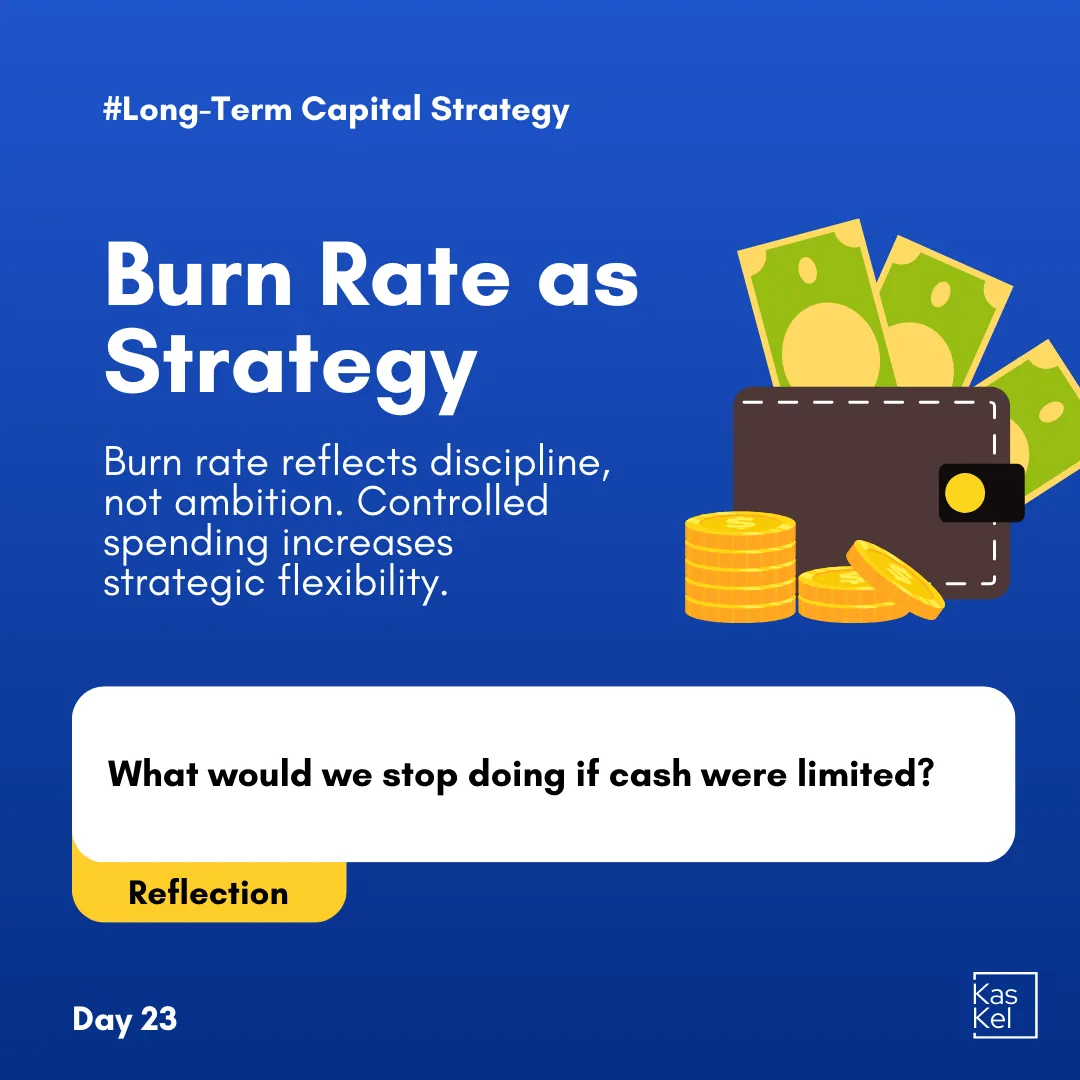
Day 22: Designing Follow-On Rounds. Each round should unlock the next. Undefined milestones create fundraising dead ends. Reflection: What milestone must this round conclusively achieve?
Day 22

Designing Follow-On Rounds

ReflectWhat milestone must this round conclusively achieve?

Day 23: Burn Rate as Strategy. Burn rate reflects discipline, not ambition. Controlled spending increases strategic flexibility. Reflection: What would we stop doing if cash were limited?
Day 23

Burn Rate as Strategy

ReflectWhat would we stop doing if cash were limited?

Day 24: Investor Communication. Clear updates reduce friction and speculation. Silence creates unnecessary risk perception. Reflection: Am I managing investor expectations proactively?
Day 24

Investor Communication

ReflectAm I managing investor expectations proactively?

Day 25: Exit Awareness. Exit awareness sharpens operating decisions. Understanding buyers clarifies long-term positioning. Reflection: Who could realistically acquire this company—and why?
Day 25

Exit Awareness

ReflectWho could realistically acquire this company—and why?

Day 26: Fundraising Fatigue Control. Extended fundraising weakens focus and morale. Time-boxed efforts protect execution quality. Reflection: What systems keep execution strong during fundraising?
Day 26

Fundraising Fatigue Control

ReflectWhat systems keep execution strong during fundraising?

Day 27: Overcapitalization Risk. Excess capital delays hard choices. Constraint forces prioritization and accountability. Reflection: What decision are we postponing because cash allows it?
Day 27

Overcapitalization Risk

ReflectWhat decision are we postponing because cash allows it?

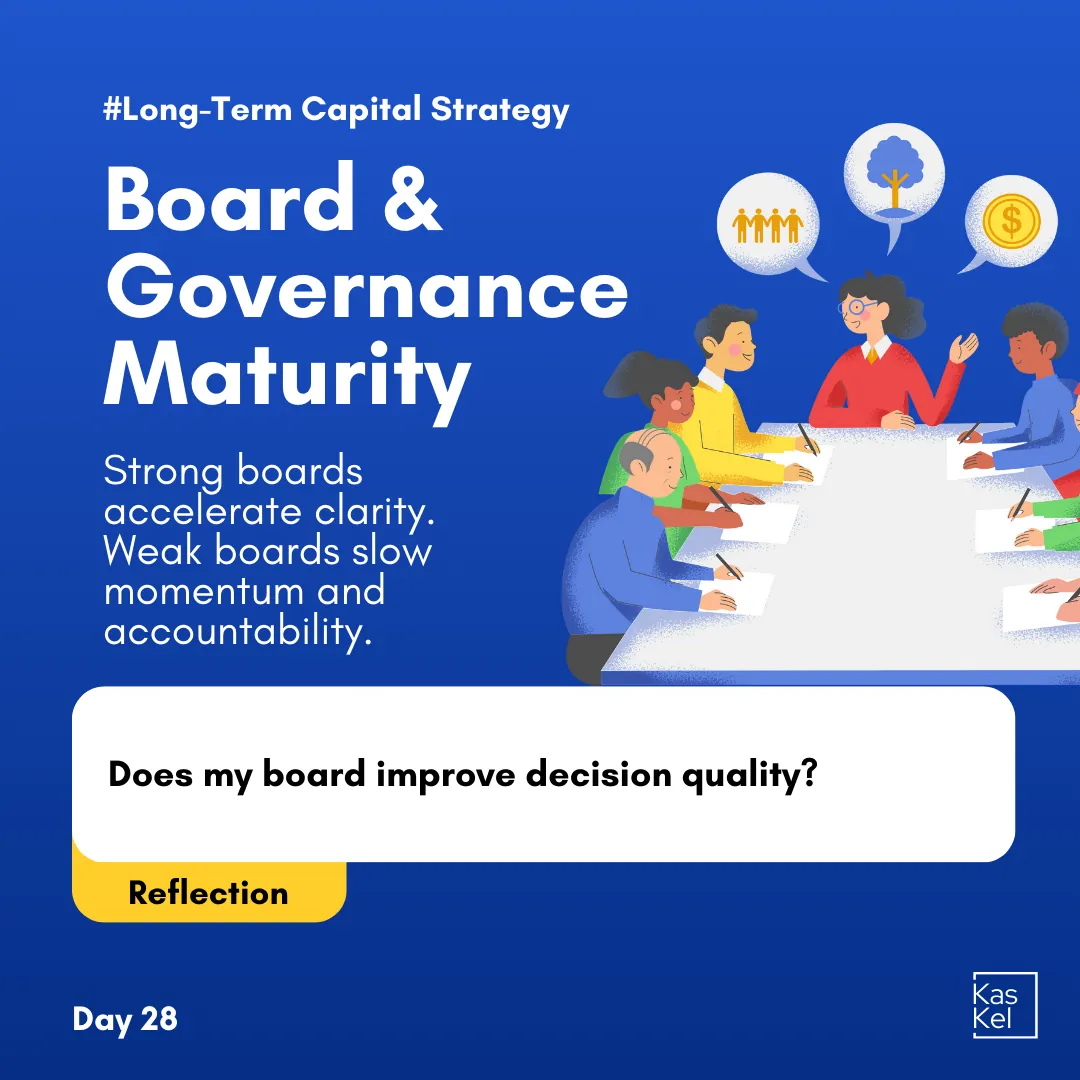
Day 28: Board & Governance Maturity. Strong boards accelerate clarity. Weak boards slow momentum and accountability. Reflection: Does my board improve decision quality?
Day 28

Board & Governance Maturity

ReflectDoes my board improve decision quality?

Day 29: Founder Capital Mindset. Professional founders treat capital as responsibility. Post-funding behavior defines long-term trust. Reflection: How does my behavior change after funding?
Day 29

Founder Capital Mindset

ReflectHow does my behavior change after funding?

Day 30: Final Investment Truth. Investors follow companies that execute relentlessly. Clarity and discipline compound faster than capital. Reflection: If funding disappeared tomorrow, would this business still win?

Day 30

Final Investment Truth

ReflectIf funding disappeared tomorrow, would this business still win?